Wednesday, September 11, 2024

The Chola Dynasty: Masters of South India and the Seas

The Chola dynasty, one of the longest-ruling and most influential dynasties in Indian history, stands as a testament to the rich cultural, architectural, and political heritage of South India. With a reign that spanned over a thousand years, the Cholas transformed South India into a thriving center of power, culture, and trade. From their innovative governance systems to their magnificent temples and vast naval empire, the legacy of the Chola dynasty continues to resonate across the Indian subcontinent.


 The Rise of the Chola Dynasty

The Cholas trace their origins back to the early centuries of the Common Era, with mentions in ancient Tamil literature, inscriptions, and early texts. However, it was in the medieval period, particularly under the reigns of Rajaraja Chola I (985–1014 CE) and his son Rajendra Chola I (1014–1044 CE), that the dynasty reached the height of its power. Rajaraja Chola I is credited with consolidating Chola's
power and expanding its territories across South India, Sri Lanka, and the Maldives. His son, Rajendra Chola I, extended the empire’s influence by leading naval expeditions that reached Southeast Asia, establishing the Cholas as a formidable maritime power. Under their rule, the Chola Empire not only dominated the land but also controlled the seas, fostering trade links and cultural exchange with regions as far as Indonesia, Thailand, and Cambodia.


 Chola Administration and Governance

One of the hallmarks of the Chola dynasty was their advanced system of governance. The Cholas are known for their efficient administration, which included a highly organized bureaucracy, a well-structured army, and a strong emphasis on local governance. The Chola kings were proponents of decentralized rule, allowing villages and local communities to govern themselves while ensuring loyalty to the central authority. The Chola system of administration is often admired for its innovative approach to land revenue management and its emphasis on irrigation. The Grand Anicut (Kallanai), an ancient dam built across the Kaveri River, is a remarkable example of the Cholas' focus on agricultural prosperity and water management. This engineering marvel, which still functions today, exemplifies the Cholas' emphasis on sustainable development and resource management.


 The Cultural Renaissance Under the Cholas


The Chola period is considered a golden age of Tamil culture, particularly in the realms of art, architecture, and literature. The Cholas were great patrons of Dravidian temple architecture, and their reign saw the construction of some of the most magnificent temples in India.  The Brihadeeswarar Temple in Thanjavur, built by Rajaraja Chola I, is a UNESCO World Heritage site and one of the greatest examples of Chola architecture. Known for its towering vimana (temple tower) and intricate sculptures, the temple is a testament to the grandeur and artistic achievements of the Chola era. The Airavatesvara Temple in Darasuram and the Gangaikonda Cholapuram Temple are other iconic architectural marvels from the Chola period. In addition to temple architecture, the Cholas were patrons of bronze sculpture, particularly the famous Chola bronzes. These exquisite statues of Hindu deities, particularly the depiction of Lord Shiva as Nataraja, the cosmic dancer, are considered masterpieces of Indian art. The Chola bronzes are known for their elegance, grace, and attention to detail, capturing the divine in a form that is both powerful and serene.


The Chola Legacy


The decline of the Chola dynasty began in the 13th century, as internal conflicts and external invasions weakened their hold on power. However, their influence endured far beyond their political decline. The Chola Empire left behind a rich legacy that continues to shape South Indian culture, religion, and art. The temples built by the Cholas remain centers of worship and pilgrimage, drawing devotees and tourists from around the world. The Chola bronzes are cherished in museums and private collections across the globe, representing the height of South Indian artistry. Moreover, the administrative and governance systems developed by the Cholas influenced the political structure of South India for centuries.


The Chola dynasty's reign marked a defining period in South Indian history. Their contributions to art, architecture, and governance have left an indelible mark on India and the world. The Cholas were not only rulers but also visionaries, who understood the importance of culture, religion, and the arts in shaping a civilization. Today, the legacy of the Chola dynasty lives on, a testament to their lasting impact on the Indian subcontinent and beyond.

Wednesday, September 4, 2024

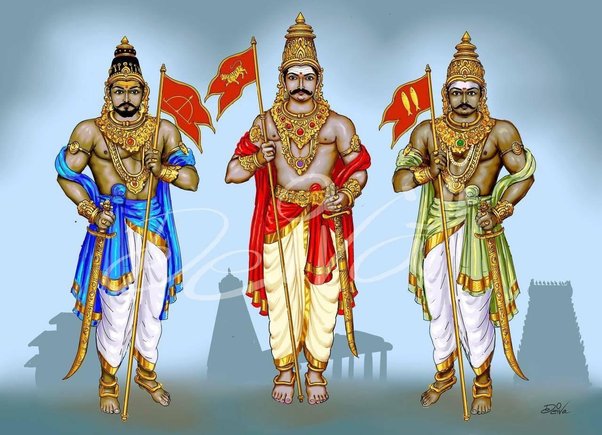
Mooventhers: The Great Kings of Tamil Nadu


The term *Mooventhar* refers to the triumvirate of ancient Tamil kings who ruled over three of the most powerful dynasties in South India: the Cholas, Pandyas, and Cheras. These three dynasties, often called the *Mooventhargal* (meaning "three kings" in Tamil), played a pivotal role in the history of Tamil Nadu and the broader Tamil-speaking world. Their reigns marked the golden age of Tamil culture, literature, and architecture, and their influence extended far beyond their borders.

The Mooventhers were the kings of three prominent Tamil dynasties:

Cholas: Renowned for their dominance over southern India and their extensive overseas empire, particularly during the medieval period. The Cholas were known for their military prowess, administrative innovations, and grand temple architecture, such as the Brihadeeswarar Temple in Thanjavur.

Pandyas: Based in Madurai, the Pandyas were known for their rich contributions to Tamil literature and culture. They were patrons of the famed Sangam era, during which many classical Tamil literary works were produced. The Pandyas were also known for their temple architecture, such as the famous Meenakshi Amman Temple.

Cheras: Rulers of the present-day Kerala region, the Cheras were a maritime power known for their trade with the Roman Empire and their contributions to the early development of Malayalam culture. The Cheras were instrumental in connecting the Tamil world with distant lands through their extensive trade networks.

The Mooventhar Influence on Tamil Culture

The Mooventhers were more than just political rulers; they were patrons of culture, religion, and the arts. Their reigns, especially during the Sangam period (circa 300 BCE to 300 CE), were marked by a flourishing of Tamil literature and poetry. The Sangam literature, a collection of classical Tamil poems, was composed by poets who were often patronized by these kings. These works reflect the social, political, and cultural life of the time and continue to be revered as a foundational element of Tamil heritage. Each of the Mooventhers contributed to the development of Dravidian temple architecture, which remains one of the most visible legacies of their rule. The temples built during their reigns are characterized by intricate sculptures, towering gopurams (gateway towers), and expansive courtyards. These temples not only served as religious centers but also as hubs of economic, social, and political life.

The Political Dynamics of the Mooventhers

The Mooventhers were often in a state of competition and conflict with one another, vying for supremacy over Tamilakam (the ancient Tamil country). Their rivalries led to a dynamic political landscape, where alliances were forged and broken, and wars were fought to establish dominance. Despite these conflicts, there were periods of relative peace and cooperation, particularly when faced with external threats. The Mooventhar period also saw significant trade with foreign powers, particularly the Romans, Greeks, and Chinese. The port cities of the Cheras, Pandyas, and Cholas were bustling centers of commerce, connecting South India to the wider world. This trade brought wealth and prosperity to their kingdoms, further solidifying their power.

 Legacy of the Mooventhers


The Mooventhers’ legacy is still celebrated in Tamil Nadu and Kerala today. Their contributions to Tamil culture, literature, and architecture remain sources of pride for the Tamil people. The temples they built continue to be active centers of worship, drawing millions of devotees each year. Moreover, the Mooventhar period laid the foundation for the Tamil cultural identity that persists to this day. The values of Tamil pride, language, and heritage that are integral to the Tamil community can be traced back to the reigns of the Mooventhers, who fostered a golden age of Tamil civilization.


The Mooventhers were more than just rulers; they were the architects of a civilization that has endured for centuries. Their reigns saw the blossoming of Tamil culture, art, and literature, and their contributions continue to shape the identity of Tamil Nadu and Kerala today. The legacy of the Cholas, Pandyas, and Cheras serves as a reminder of the power and influence of ancient Tamil civilization, a legacy that still resonates in modern South India.

Wednesday, August 28, 2024

The Kushan Empire: Bridging East and West in Ancient Asia

The Kushan Empire, a powerful and influential realm that thrived from the 1st to the 3rd century CE, played a crucial role in shaping the cultural and economic landscape of Central and South Asia. This empire, which at its height extended from the Aral Sea through much of present-day India, Pakistan, and Afghanistan, served as a vital link between the civilizations of the East and West. In this blog post, we will explore the origins of the Kushan Empire, its significant contributions, and its lasting impact on history.


Origins and Rise to Power

The Kushan Empire traces its roots to the nomadic Yuezhi tribes from the steppes of Central Asia. Driven westward by the Xiongnu, the Yuezhi migrated to Bactria (modern-day northern Afghanistan and Uzbekistan) in the 2nd century BCE. Over time, they coalesced into a formidable force under the leadership of the Kushan clan. The first major ruler of the unified Kushan Empire was Kujula Kadphises, who consolidated control over the region in the early 1st century CE. Under Kujula's successors, particularly Vima Kadphises and Kanishka the Great, the Kushan Empire expanded dramatically. Kanishka, who ruled from around 127 to 150 CE, is particularly renowned for his military conquests, administrative reforms, and patronage of Buddhism.


Cultural and Economic Flourishing

The Kushan Empire was a melting pot of cultures, religions, and traditions, owing to its strategic location along the Silk Road. This trade route facilitated the exchange of goods, ideas, and cultural practices between the East and West, making the Kushan Empire a crucial player in ancient globalization.

1. Art and Architecture: The Kushans are credited with significant contributions to art and architecture, particularly the Gandhara and Mathura schools of art. Gandhara art, influenced by Greek, Roman, Persian, and Indian styles, is renowned for its realistic and detailed sculptures of Buddhist deities. Mathura art, on the other hand, is noted for its robust and sensuous depictions of Hindu gods and goddesses.

2. Religion: The Kushan rulers were known for their religious tolerance and patronage. Kanishka the Great, in particular, played a pivotal role in the spread of Buddhism. He convened the Fourth Buddhist Council in Kashmir, which helped standardize Buddhist texts and practices. Additionally, the Kushans supported Zoroastrianism, Hinduism, and various local cults, fostering a diverse religious landscape.

3. Trade and Economy: The Kushan Empire was a hub of trade, facilitating the exchange of silk, spices, precious metals, and other luxury goods. Their control over key trade routes enabled the flow of commerce between the Roman Empire, Persia, China, and India. Kushan coinage, characterized by its rich iconography and inscriptions in Greek and Bactrian, reflects their cosmopolitan and prosperous economy.


Political Structure and Administration

The Kushan Empire's political structure was characterized by a centralized administration with regional governors overseeing various provinces. The capital cities, initially in Bactria and later in Peshawar (in modern-day Pakistan), served as administrative and cultural centers. The Kushans adopted elements of Hellenistic, Persian, and Indian governance, creating a unique and effective administrative system. Kushan rulers issued decrees in multiple languages, including Greek, Prakrit, Bactrian, and Sanskrit, to cater to their diverse population. This linguistic inclusivity not only facilitated governance but also promoted cultural exchange and integration.


 Decline and Legacy

The decline of the Kushan Empire began in the late 3rd century CE due to a combination of internal strife, economic difficulties, and external pressures from the Sassanian Empire and the Gupta Empire. Despite its fall, the legacy of the Kushan Empire endured.

1. Cultural Influence: The artistic and architectural styles developed during the Kushan era influenced subsequent Indian and Central Asian art. Gandhara art, in particular, left a lasting mark on Buddhist iconography across Asia.

2. Religious Impact: The Kushans' patronage of Buddhism contributed to its spread across Central and East Asia. The fusion of Greco-Buddhist art facilitated the transmission of Buddhist imagery to China, Korea, and Japan.

3. Historical Significance: The Kushan Empire's role as a cultural and economic bridge between East and West highlights the interconnectedness of ancient civilizations. Its history offers valuable insights into the dynamics of ancient trade, cultural exchange, and political integration.

The Kushan Empire stands as a testament to the richness and diversity of ancient Asia. Its strategic location along the Silk Road, coupled with its cultural and religious inclusivity, fostered a thriving civilization that left an indelible mark on history. As we delve into the legacy of the Kushans, we are reminded of the enduring power of cultural exchange and the interconnectedness of our world.

Wednesday, August 21, 2024

Satavahanas: The Pioneers of Deccan India


The history of the Deccan region of India is marked indelibly by the rise and reign of the Satavahanas, a dynasty that held sway from approximately 235 to 100 BC. They are known not just as remarkable rulers, but also as pioneers in various domains, from commerce and culture to politics and religion. This blog post will delve into the origins of the Satavahana dynasty, their rule and influence, and their ultimate decline.

The Origins of the Satavahanas

The Satavahanas, also known as the Andhras in ancient texts, have a somewhat obscure origin. They emerged in the aftermath of the decline of the Mauryan empire, asserting their power primarily in the Deccan region, but eventually expanding their influence as far north as central India. Their rise to power is characterized by a blend of indigenous and foreign influences, as they successfully integrated aspects of the Mauryan administrative system into their own, while also fostering a unique cultural and political identity.

The Reign and Influence of the Satavahanas

The reign of the Satavahanas was marked by political stability, economic prosperity, and cultural development. They established diplomatic relations and trade links with distant kingdoms, promoting a vibrant exchange of goods and ideas. The Satavahanas were great patrons of Buddhism, and their rule saw the construction of numerous rock-cut Buddhist monuments. At the same time, they also respected and promoted Brahmanical traditions, indicating a high degree of religious tolerance and pluralism. Perhaps the most significant contribution of the Satavahanas was their introduction of the Deccan to the idea of a centralized political authority, a concept that had hitherto been foreign to the region.

The Decline of the Satavahanas

The decline of the Satavahanas was as gradual and multifaceted as their rise. Over time, their vast empire became difficult to manage and internal conflicts began to surface. The final blow to their power came in the form of invasions by the Western Kshatrapas, a Saka dynasty. Despite the decline, the Satavahanas left a lasting legacy in the form of a rich architectural heritage, a multicultural society, and an administrative system that would influence kingdoms in Deccan India for centuries to come.

Conclusion

The Satavahanas' rise, rule, and decline offer valuable insights into the dynamics of power, culture, and society in ancient Deccan India. Their ability to balance indigenous traditions with foreign influences, their commitment to religious tolerance, and their administrative acumen set them apart as one of the most important dynasties in Indian history. The legacy of the Satavahanas continues to resonate today, serving as a reminder of a time when the Deccan was a vibrant hub of commerce, culture, and political power.

Wednesday, August 14, 2024

The Kanva Dynasty: An Overlooked Epoch in Indian History

In the rich tapestry of Indian history, certain dynasties shine with renowned brilliance, while others, despite their significant contributions, remain relatively obscure. One such dynasty is the Kanva Dynasty, which reigned from 71 BC to 27 BC. Though its tenure was brief, the Kanva Dynasty played a crucial role in the transition between the Shunga Dynasty and the rise of the Satavahanas, marking an important period in ancient India's historical and cultural landscape.

The Fall of the Shunga Dynasty

The Kanva Dynasty emerged from the shadows of the Shunga Dynasty, which had itself taken power from the Maurya Dynasty. The Shungas, known for their patronage of the arts and their efforts to restore Brahmanical orthodoxy, fell to internal strife and palace intrigue. The last Shunga ruler, Devabhuti, was overthrown by his minister Vasudeva Kanva, the founder of the Kanva Dynasty. This coup d'état marked the end of the Shunga era and the beginning of the Kanva rule.

The Kanva Rule: Governance and Administration


Vasudeva Kanva, the founder of the Kanva Dynasty, was a Brahmin, which was a significant departure from the more common Kshatriya rulers of the time. Despite this, or perhaps because of it, the Kanvas maintained the administrative structures and cultural patronage that characterized their Shunga predecessors. The Kanva rulers, like the Shungas, continued to support Brahmanism and the performance of Vedic rituals, contributing to the preservation and propagation of these traditions. However, there is scant historical evidence detailing the specifics of their administrative reforms or their day-to-day governance, which suggests that they may have largely continued the systems established by the Shungas.

 Cultural and Religious Contributions

During the Kanva period, the subcontinent was a melting pot of diverse religious and cultural traditions. The Kanvas are noted for their support of Brahmanical practices, but they also presided over a time when Buddhism and Jainism continued to flourish. This era saw the coexistence and mutual influence of these major religious traditions, contributing to the rich spiritual and philosophical discourse of the time.

The End of the Kanva Dynasty

The Kanva Dynasty's rule came to an end in 27 BC when the Satavahanas, a powerful dynasty from the Deccan region, rose to prominence. The Satavahanas, led by their able and ambitious rulers, gradually expanded their territory, eventually overthrowing the last Kanva king. This transition marked the beginning of a new era in Indian history, characterized by the Satavahana's extensive trade networks and their patronage of Prakrit literature and Buddhist art.

 Legacy and Historical Significance

Although the Kanva Dynasty ruled for only 44 years, its importance lies in its role as a bridge between the Shunga and Satavahana periods. The Kanvas ensured the continuity of cultural and religious traditions during a time of political transition. Their reign, though brief, was a period of stabilization and consolidation that set the stage for the subsequent developments under the Satavahanas. The relative obscurity of the Kanva Dynasty in mainstream historical narratives does not diminish their role in the historical continuum of ancient India. As more archaeological and textual evidence comes to light, the contributions of the Kanvas may yet receive the recognition they deserve.

Conclusion

The Kanva Dynasty, ruling from 71 BC to 27 BC, stands as a testament to the dynamic and often tumultuous nature of ancient Indian history. Emerging from the decline of the Shunga Dynasty and paving the way for the rise of the Satavahanas, the Kanvas played a pivotal role in preserving and fostering the cultural and religious milieu of their time. As historians continue to unearth the past, the legacy of the Kanva Dynasty serves as a reminder of the intricate and interwoven narratives that constitute the rich history of India.

Wednesday, August 7, 2024

The Rise and Reign of the Sunga Dynasty (181–71 BC): Revival and Reinvention in Ancient India

In the annals of ancient Indian history, the Sunga dynasty occupies a fascinating yet often overlooked chapter. Emerging in the wake of the decline of the Mauryan Empire, the Sungas rose to power in 181 BC, ushering in a period of revival and reinvention in the Indian subcontinent. Let's delve into the rise and reign of the Sunga dynasty, exploring its contributions, challenges, and enduring legacy.


The Rise to Power:

The Sunga dynasty traced its origins to Pushyamitra Sunga, a military general who seized power following the assassination of the last Mauryan emperor, Brihadratha. Pushyamitra's ascension marked the beginning of a new era in Indian politics, as the Sungas sought to consolidate power and establish themselves as legitimate rulers in the aftermath of the Mauryan decline.


Consolidation and Governance:

Under the leadership of Pushyamitra and his successors, the Sunga dynasty focused on consolidating their rule and restoring stability to the Indian subcontinent. They implemented administrative reforms, reorganized the bureaucracy, and revitalized trade and commerce, laying the groundwork for a period of relative prosperity and cultural flourishing.


Cultural Patronage and Religion:

One of the most enduring legacies of the Sunga dynasty was its patronage of art, literature, and religion. Buddhist and Hindu traditions flourished under Sunga rule, with notable contributions to architecture, sculpture, and literature. The Sungas sponsored the construction of stupas, monasteries, and temples, further cementing their reputation as champions of religious pluralism and cultural exchange.


Challenges and Decline:

Despite their achievements, the Sunga dynasty faced numerous challenges, including internal strife, external invasions, and economic instability. The later years of Sunga rule were marked by fragmentation and decline, as regional powers vied for supremacy and the dynasty's influence waned.


Legacy:

While the Sunga dynasty may have been short-lived, its impact on Indian history and culture was profound. The Sungas played a pivotal role in shaping the religious and artistic landscape of ancient India, leaving behind a legacy of cultural vibrancy and religious pluralism. Moreover, their administrative reforms and governance laid the groundwork for subsequent dynasties to build upon, contributing to the enduring legacy of ancient Indian civilization.


Conclusion:

The Sunga dynasty represents a period of revival and reinvention in ancient Indian history, following the decline of the Mauryan Empire. Despite facing numerous challenges, the Sungas left an indelible mark on the political, cultural, and religious landscape of the Indian subcontinent. As we reflect on their legacy, we gain deeper insights into the dynamic interplay of power, culture, and religion in shaping the course of Indian history.

Wednesday, July 31, 2024

Ashoka the Great: A Beacon of Peace and Enlightenment (268–232 BCE)


In the annals of ancient Indian history, few figures command as much reverence and admiration as Ashoka the Great. As the third emperor of the Mauryan dynasty, Ashoka's reign from 268 to 232 BCE marked a transformative period characterized by profound moral awakening, diplomatic prowess, and cultural flourishing. Let's delve into the life and legacy of Ashoka, a ruler whose legacy continues to inspire and resonate across the ages.


The Early Years:

Born into the illustrious Mauryan lineage, Ashoka ascended to the throne following the death of his father, Bindusara. His formative years were marked by ambition and martial prowess, as he quickly distinguished himself as a capable administrator and military leader. However, it was a series of pivotal events that would ultimately shape the trajectory of Ashoka's reign and legacy.


The Kalinga War:

One of the defining moments of Ashoka's reign was the bloody campaign against the kingdom of Kalinga. The brutal conflict, waged in 261 BCE, resulted in a staggering loss of life and left Ashoka deeply shaken by the horrors of war. It was this pivotal moment of introspection that would set Ashoka on a path of spiritual transformation and moral enlightenment.


The Edicts of Ashoka:

Following his conversion to Buddhism, Ashoka embarked on a mission to promote peace, tolerance, and social welfare throughout his empire. He erected a series of rock and pillar edicts, inscribed with his teachings and moral precepts, which served as a testament to his commitment to compassionate governance. These edicts, written in various languages and scripts, spread Ashoka's message of unity and harmony to every corner of his realm.


Diplomacy and Expansion:

Ashoka's reign was not devoid of military campaigns, but his approach to conquest was tempered by a newfound commitment to non-violence and compassion. He employed diplomacy and soft power to expand his empire, forging alliances and establishing trade routes that extended Mauryan influence across South Asia and beyond.


Legacy:

Ashoka's legacy as a ruler of unparalleled wisdom and compassion endures to this day. His conversion to Buddhism and advocacy for the principles of Dhamma laid the groundwork for a more humane and egalitarian society. Moreover, his commitment to social welfare, including the establishment of hospitals, veterinary clinics, and welfare centers, left a lasting impact on the well-being of his subjects.


Conclusion:

The reign of Ashoka the Great represents a zenith of moral enlightenment and compassionate governance in ancient Indian history. His transformation from a conqueror to a champion of peace and social justice serves as an enduring testament to the power of moral leadership and the potential for individual redemption. As we reflect on Ashoka's legacy, we are reminded of the enduring relevance of his teachings and the profound impact of his reign on the course of human history.

Wednesday, July 24, 2024

Bindusara: The Silent Pillar of the Mauryan Empire (298–272 BCE)

Introduction: In the illustrious saga of the Mauryan Empire, the reign of Bindusara stands as a pivotal yet often overshadowed chapter. As the son and successor of the legendary Chandragupta Maurya, Bindusara inherited a realm that spanned vast swathes of the Indian subcontinent. Despite the towering shadow cast by his father, Bindusara's reign was marked by stability, expansion, and the consolidation of Mauryan power. Let's delve into the life and legacy of Bindusara during the period of 298–272 BCE.

The Inheritance of Empire:

 Born into the illustrious Mauryan lineage, Bindusara ascended to the throne following the abdication of his father, Chandragupta Maurya. He inherited an empire that had been forged through conquest and diplomacy, extending from the northern plains to the Deccan plateau. Bindusara's reign was characterized by continuity with the policies and institutions established by his father, ensuring the stability and prosperity of the Mauryan realm.

Expansion and Conquest: 

Despite his moniker "Amitraghata" or "Slayer of Enemies," Bindusara's reign was marked by relatively limited military campaigns compared to his father. Nevertheless, he continued the process of territorial expansion initiated by Chandragupta, further consolidating Mauryan hegemony over the Indian subcontinent. Bindusara's diplomatic skills and adept management of vassal states contributed to the overall stability of his empire.

Cultural Patronage:

 In addition to his political and military endeavors, Bindusara was also a patron of art, literature, and philosophy. His court attracted scholars and intellectuals from far and wide, fostering a vibrant cultural milieu that flourished under Mauryan patronage. Bindusara's support for diverse religious traditions, including Buddhism and Jainism, further enriched the cultural tapestry of his empire.

Succession and Legacy:

Bindusara's reign as the second Mauryan emperor witnessed the consolidation of the empire's territorial expansion, bolstered by his diplomatic finesse. His support for diverse religious traditions and patronage of culture fostered a vibrant intellectual milieu. Bindusara's administrative reforms and stable governance set the stage for the transformative reign of his son, Ashoka the Great. His legacy endures as a crucial link in the Mauryan dynasty's chain, contributing to the empire's stability and prosperity, and laying the foundation for Ashoka's epochal rule.


In conclusion, Bindusara, the second Mauryan emperor, played a pivotal role in shaping the trajectory of the ancient Indian subcontinent. Through his adept diplomacy, cultural patronage, and steady governance, Bindusara strengthened the foundations of the Mauryan Empire, ensuring its stability and prosperity. His legacy as a capable ruler and a patron of culture endures as a crucial chapter in the rich tapestry of Indian history. Bindusara's reign not only facilitated the expansion of the Mauryan realm but also paved the way for the transformative rule of his renowned successor, Ashoka the Great. In the annals of ancient Indian history, Bindusara's quiet yet significant contributions remain a testament to the enduring legacy of the Mauryan dynasty.

Wednesday, July 17, 2024

Chandragupta Maurya: Architect of Empire (322–298 BCE)

In the annals of ancient Indian history, few figures loom as large as Chandragupta Maurya. Rising from obscurity to become the founder of one of the most illustrious dynasties in Indian history, Chandragupta's reign marked a turning point in the political landscape of the Indian subcontinent. From humble beginnings to the pinnacle of power, his journey epitomizes the spirit of ambition, perseverance, and statecraft. Let's delve into the life and legacy of Chandragupta Maurya during the period of 322–298 BCE.


The Rise to Power:

Born into modest circumstances, Chandragupta's early life was marked by adversity and struggle. However, fate intervened when he encountered Chanakya, a brilliant strategist and statesman, who recognized Chandragupta's potential and groomed him for greatness. With Chanakya's guidance, Chandragupta embarked on a quest to overthrow the reigning Nanda dynasty and establish his own empire.


The Mauryan Empire:

In 322 BCE, Chandragupta achieved a momentous victory, toppling the Nanda dynasty and laying the foundations of the Mauryan Empire. His realm encompassed vast swathes of the Indian subcontinent, stretching from the northern plains to the Deccan plateau. Chandragupta's empire was characterized by efficient administration, economic prosperity, and cultural flourishing, setting a precedent for future Indian dynasties.


Military Campaigns:

Chandragupta's reign was marked by a series of military campaigns aimed at expanding and consolidating his empire. His conquests extended into the northwestern territories, bringing him into conflict with the Greek satraps who had inherited the legacy of Alexander the Great's incursion into India. Chandragupta's successful campaigns against these western powers cemented his reputation as a formidable military leader.


Legacy and Impact:

Chandragupta's legacy extends far beyond the boundaries of his empire. His reign laid the groundwork for the golden age of Mauryan rule, which reached its zenith under his grandson, Ashoka the Great. Moreover, Chandragupta's administrative reforms, including the establishment of a centralized bureaucracy and a system of taxation, set a precedent for governance in ancient India.


Conclusion:

The period of 322–298 BCE represents a watershed moment in the history of ancient India, marked by the rise of Chandragupta Maurya and the establishment of the Mauryan Empire. Chandragupta's visionary leadership, military acumen, and administrative reforms transformed the political landscape of the subcontinent, leaving an indelible mark on the course of Indian history. As we reflect on Chandragupta's legacy, we are reminded of the enduring power of human ambition and resilience in the face of adversity.

Wednesday, July 10, 2024

The Gupta Empire: The Golden Age of Ancient India


The Gupta Empire, which ruled much of northern India from the 4th to the 6th century CE, is often celebrated as one of the most glorious periods in Indian history. Known as the "Golden Age of India," the Gupta period was marked by significant advancements in science, mathematics, art, literature, and culture. Under the rule of the Gupta emperors, India saw a flourishing of knowledge and creativity that would have a lasting impact on the subcontinent and beyond.


The Rise of the Gupta Empire


The Gupta dynasty was founded by Sri Gupta in the early 4th century CE, but it was his grandson, Chandragupta I, who is credited with laying the foundations for the empire. Through strategic marriages and alliances, Chandragupta I expanded his kingdom, marking the beginning of the Gupta Empire's rise to power. His successor, Samudragupta, further extended the empire through military conquests, earning a reputation as one of India’s greatest warrior-kings. Samudragupta's reign (c. 335–375 CE) is often referred to as a period of imperial expansion, during which he brought large parts of India under Gupta control.


The empire reached its zenith under Chandragupta II (c. 380–415 CE), also known as Vikramaditya, who is credited with solidifying Gupta rule across northern India. Chandragupta II is remembered not only for his military prowess but also for fostering a vibrant cultural and intellectual environment that contributed to the Gupta Empire’s reputation as a golden age.


 The Golden Age: A Flourishing of Knowledge and Culture


The Gupta Empire is often referred to as the "Golden Age of India" due to the remarkable achievements in various fields during this period. One of the most notable contributions of the Gupta period was in the field of science and mathematics.


 1. **Mathematics and Astronomy**


The Gupta period saw the development of the concept of zero as a number, which revolutionized mathematics not just in India but eventually across the world. The great mathematician and astronomer Aryabhata, who lived during this era, made significant contributions to algebra, trigonometry, and the understanding of planetary motions. Aryabhata’s work, particularly his book *Aryabhatiya*, laid the groundwork for future advancements in Indian and Islamic mathematics.


The decimal system, which is now the foundation of modern arithmetic, also saw significant refinement during the Gupta period. The Guptas' emphasis on education and scholarly pursuits helped India become a center of learning during this time.


 2. **Art and Architecture**


Gupta art is renowned for its elegance, refinement, and spiritual expression. This period saw the creation of some of the most beautiful sculptures, murals, and architecture in Indian history. The sculptures from this era are characterized by their grace and attention to detail, particularly the depictions of Hindu deities and Buddhist figures. The iconic seated Buddha statues from Sarnath and the intricate carvings of Hindu gods in temple architecture are exemplary of Gupta artistry.


The Gupta period also witnessed the construction of magnificent temples, many of which were dedicated to Hindu deities like Vishnu and Shiva. These temples were often adorned with exquisite carvings and sculptures that showcased the artistic mastery of the time. The Dashavatara Temple in Deogarh and the Udayagiri caves are prime examples of Gupta architecture.


 3. **Literature and Philosophy**


The Gupta period saw a renaissance in Sanskrit literature. Kalidasa, often regarded as one of India’s greatest poets and playwrights, lived during this time. His works, such as *Shakuntala* and *Meghaduta*, are considered masterpieces of Sanskrit drama and poetry. Kalidasa’s writings are known for their lyrical beauty, vivid descriptions of nature, and profound emotional depth.


In addition to literature, philosophy, and religious discourse flourished under the Gupta rulers. The empire was a center of both Hindu and Buddhist scholarship, with Nalanda University becoming one of the most prominent centers of learning in the ancient world. Scholars from across Asia came to study at Nalanda, which housed extensive libraries and offered a diverse range of subjects, from religion to astronomy.


Gupta Society and Economy


The Gupta Empire was characterized by a highly organized and prosperous society. The economy was based on agriculture, with the fertile plains of the Ganges River providing abundant resources for the population. Trade also played a crucial role in the empire’s economy, with the Guptas establishing strong trade links both within India and with distant lands such as China, Southeast Asia, and the Mediterranean.


The Guptas maintained a stable and efficient administration that ensured the welfare of the population. This period saw the rise of a strong and unified political system, which allowed for peace and stability across the empire. The caste system became more deeply entrenched during this time, influencing the social and religious life of the population.


 The Decline of the Gupta Empire


Despite its many achievements, the Gupta Empire eventually began to decline in the 6th century CE. The empire faced increasing pressure from external invasions, particularly from the Huns, a Central Asian nomadic group. These invasions weakened the Gupta rulers’ control over their territories, leading to the fragmentation of the empire.


By the mid-6th century, the Gupta Empire had largely disintegrated, but its cultural and intellectual legacy lived on. The advancements made during the Gupta period continued to influence Indian society for centuries, and the period is still remembered as one of the high points of ancient Indian civilization.


 Conclusion


The Gupta Empire’s contributions to art, science, literature, and philosophy have left an enduring legacy that continues to shape Indian culture to this day. The Gupta period is often seen as a golden age in Indian history, a time when the subcontinent was at the forefront of intellectual and cultural advancements. Even after the fall of the Gupta Empire, the knowledge, ideas, and cultural achievements of this period continued to inspire future generations and contribute to the rich tapestry of India’s heritage.

Wednesday, July 3, 2024

Clash of Titans: Persians and Greeks in Ancient India – The Arrival of Alexander in 327 BC

The meeting of Persians and Greeks in ancient history was not merely a collision of empires but a convergence of cultures that left an indelible mark on the annals of human civilization. One of the pivotal moments in this saga occurred in 327 BC when Alexander the Great, the Macedonian conqueror, set foot on the shores of the Indian subcontinent. This epochal event began a new chapter in the tumultuous relationship between East and West. Let's delve into the dynamics of this encounter and its profound implications.


The Persian Legacy:

To understand the significance of Alexander's arrival in India, one must first appreciate the enduring legacy of the Persian Empire. Persia had loomed large over the Near East for centuries, wielding power and influence stretching
from the Mediterranean to the Indus River. Under the Achaemenid dynasty, Persia established itself as a formidable force, fostering trade, diplomacy, and cultural exchange across its vast domains.


The Greek Conquest:

In the wake of Persia's expansion, Greece emerged as a rival power, fueled by a spirit of independence and martial prowess. Led by Alexander the Great, the Greeks embarked on a campaign of conquest that would reshape the geopolitical landscape of the ancient world. Their audacious march eastward brought them into direct confrontation with the mighty Persian Empire, culminating in a series of epic battles that decided the fate of nations.


Alexander's Indian Expedition:

Driven by a relentless thirst for glory and conquest, Alexander turned his gaze towards the fabled riches of India. In 327 BC, he crossed the Hindu Kush and entered the northwestern territories of the Indian subcontinent. His incursion into India was met with both awe and resistance as he encountered formidable adversaries, including the Persian-appointed satraps who governed the region.


The Legacy of Alexander's Campaign:

Though Alexander's incursion into India was brief, its repercussions were profound. His military campaigns laid the groundwork for the subsequent Hellenistic period, during which Greek culture and influence permeated the lands of the Near East and beyond. Moreover, Alexander's expedition facilitated cultural exchange and trade between East and West, paving the way for the emergence of cosmopolitan societies that transcended traditional boundaries.


Conclusion:

The arrival of Alexander the Great in India represents a pivotal moment in the confluence of Persian and Greek civilizations. It was a collision of titans, whose reverberations echoed across continents and centuries. As we reflect on this historic encounter, we gain deeper insights into the complex interplay of power, ambition, and cultural exchange that shaped the course of human history. In the crucible of conflict and cooperation, the legacies of Persia and Greece endure as enduring testaments to the enduring spirit of human endeavor.

A Story of India’s Partition

 On the night of August 14, 1947, the skies over Delhi were alight with fireworks. People danced in the streets, hugged strangers, and cried...